Wednesday, October 26, 2011

Not sure if this was published, so I'm splashing it out there.

INDIGENOUS WISDOM KEEPER

They told me if I visited, asked too many questions, he’d kill me. I didn’t believe them.

He was the wisdom keeper in Carlyle County, and a woman was missing. I have duty to consider, as did Harry Trimble, who couldn’t be more dead. Three years this spring.

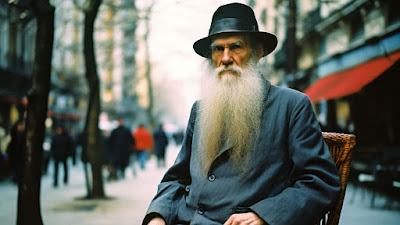
Carlyle’s wisdom keeper had one tooth. A front tooth. Larger than it should have been, not food worn, as most are, but still thick, as if this one tooth had just took over all the other teeth along the gumline. He was wrapped in a thin sheet when I sat down to talk, but removed it when I removed my campaign hat. It seemed every bone in his body pushed through to the skin and his eyes were fixed and glazed, full of pupil and without color. He looked worse than some bodies I’ve found.

He never entered his house. The day I saw him, he was on the front porch, just like they told me he’d be. Rusted nails and other fixtures I couldn’t place held wire screen in place around the porch. On the south end was his bed and the north end his photo album, which I never had the chance to see. It’s where I talked with him about Eve Redding, a young girl gone missing so long someone finally mentioned the wisdom keeper and got my interest up.

We talked for ten minutes. And in those ten minutes, the wisdom keeper prayed four times. He never entered the house. Not that day, and, as he said, not one day since Claudia gave him what I would call the burden, but the keeper called love. When he prayed, he prayed to Claudia.

She passed twelve years ago. What I would think were the strangest things, bothered him most of all, he said. The small things. A napkin used the morning before the afternoon she stopped smiling. A hair, curved like a cocked snake and stuck, once wet and now fixed, near the drain in the bathroom sink. It was too much pain to see those things now, he said. Too much hurt in a world already plenty hard enough.

For all those years he’d lived on the fringes of his home. The porch during warm months and a tool shed with a coal stove in the winter. Harry Trimble met with him in the month of April, as anyone interested can find on his tombstone.

There was an investigation, which I had no part in being new to the sheriff’s department then. The wisdom keeper watched the officers pick apart every inch of his property without emotion. Only when they entered the home did the sheriff and two others have to restrain him. Somewhere there’s a file at the station that details what was found in the house, but I didn’t read it before leaving. Hindsight being twenty twenty, and all that.

Eve Redding couldn’t be more dead, like Trimble. That’s what I learned at a price. Always a price. Claudia’s love was a powerful thing, the keeper’s burden a poisoned well of knowledge. My duty an albatross.

I’m sure there’s a file somewhere. Read it.

Thursday, October 13, 2011

Harry Keeps Teaching Us

That's what it should look like when you're writing your heart out, folks.

Just like that.

Thursday, October 6, 2011

Fool's Gold

Vapors. Stench.

Everlasting this and that, so obscure.

Items from a kinder past, youthful, clear and light of heart, simmer in the heat at the foot of the bed. Float in the air, dust mites alive still after twenty years. Tokens of achievement, a feeling gone from you, but tokens floating in that heat of now.

More clearly, a broken Babe Ruth League trophy, the bat held in the Bambino’s hands gone so it’s as if George Herman is praying sideways.

Vapors. Stench.

This in mind, a fake gold trophy found in a shithole room that was a place so magical a talking rabbit might have led you there, you turn the glass and it is the vapors simmering, moving, and the stench, not tokens.

Fool's gold.

Monday, October 3, 2011

Cloud To Ground

(Written for my friends, Jereny and Amy Tackett, and published in Kudzu, Summer 2008)

Slabs of rain smack the windshield of Jim’s truck. It’s a surprise rain, no forecast, no warning, just slabs of rain dumped out from smudged clouds trying to beat dents and then trenches straight through the earth. Every second that passes, the earth might just give in under the pressure, lop open like a torn apart orange and stretch its lava choked throat wide enough to take in Jim, his truck and everything else.

Jim tries to concentrate on the radio, to take the curves in the road from memory until the clouds go calm, come together in the dark sky and spare the earth. Ten minutes and he would be home.

The radio. Rain, rain, rain. No lightning, no thunder. The radio. Jim’s truck pushing its grill into the storm, first at moderate speed and then recoiling, backing away to slower and slower speed. Jim praying or talking, singing with the radio under his breath. Seven minutes and he would be home.

In the dark sky, above the world-hating clouds, all is calm, the even darker calm of the stratosphere, the floating held breath of the near cosmos. The labor of Jim’s truck is lost in this place, the slicing of the tires across two inches of dirty water creeping across the potholed pavement, the strangled off gargling of the motor. None of that exists here. From here it’s easy to see the smudged clouds are still full, hardly a drop of their hatred spilled.

Below, Jim is unaware of the scene from the cosmos. He still sings with the radio, pushes through curves from memory, navigates down hills with his knees pulled up to the steering wheel, expecting the storm to ease. He has no way of knowing the storm will not pass, that his memory will fail him in twelve seconds and that his truck will fall into the partly opened mouth of the earth, the muddy cavity that will swallow him.

From the stratosphere there is the still moment just before a sound occurs, the squirming of clouds and then the banging together, smudge against smudge, the lurch and then the real storm, a final spilling of weight, and the first clear blue-white bolt of lightning. The forecast, had there been a forecast, would have called this cloud to ground lightning. It touches down in the front yard of Jim’s house, just beside the rose bush. His wife flinches from the front porch. She bounces in the porch swing, her fingers strapped to her lips, ignoring the spray of rain from the gutter. She rubs her arms, feels the cold skin with her fingernails, the electrical air pulling up the fine hairs from her wrist to the her elbow. The familiar scent of a storm from childhood, before marriage, before worry. Beneath that, she thinks she can smell burned rose petals. She has not started crying. She keeps her lips in place with her fingers and feeds herself with hope. Starving, she will cry soon.

The last raindrop trails behind a million others, but only by a second. Still, it will be the last to land, and it will land, unlike many of the others, on the spinning tire of Jim’s truck, sloughed onto its side into the ditch. The raindrop spins small within the inner rim of the wheel, rotates five times quickly and then is flung out to mix with the rushing waters of the ditch, swept away from inside the cab where the brown water is rippled red, the deep red of front yard roses blooming wetly from Jim’s nose, mouth, ears, eyes.

Another still moment above the clouds and then the first and final pounding of thunder, the wailing of the scorched universe, darkness swallowing darkness.